Why Has the Gold Price Fallen? The Inflation-Hedge Myth, Explained
Update log (1)
- — The fall this article describes ran on into July and then reversed. Gold bottomed at $3,986 an ounce on 16 July 2026 and closed at $4,242 on 6 August, after a July US payrolls report showing 23,000 jobs lost cut the market-implied odds of a September Fed rate hike from 54.7% to 44.0%. The mechanism set out here is unchanged — rates, not inflation — it has simply started running the other way.

Gold has dropped roughly 25% from the record high it set in late January 2026, sliding from around $5,589 an ounce to about $4,200 by late June — and, strangely, it has fallen even as inflation has climbed to a three-year high. That seems to defy gold’s reputation as the ultimate inflation hedge, and it’s where a common misconception comes in. The “myth” is the idea that gold simply rises with inflation. In reality, what drives gold most is interest rates, and right now they’ve turned against it. Here’s the full explanation. (This is general market context, not investment advice — see the note at the end.)
How far has the gold price fallen?
After a powerful multi-year run, gold peaked near $5,589 per ounce on January 28, 2026, then reversed.
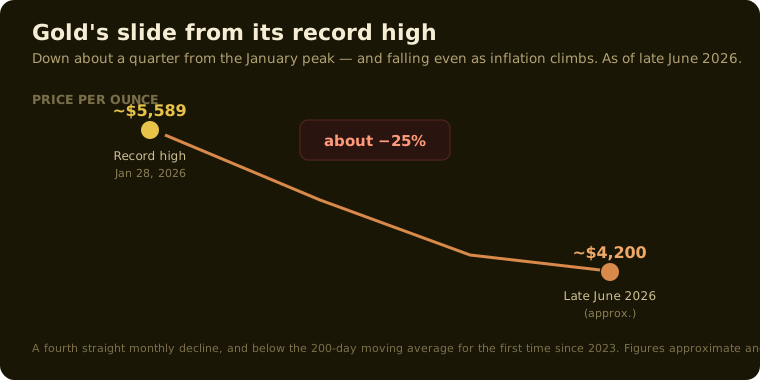
By late June 2026 it was trading around $4,100 to $4,300 — roughly a quarter below that peak, and heading for a fourth consecutive monthly decline. It also slipped below its 200-day moving average for the first time since 2023, a level traders watch closely. After years of headlines about gold hitting fresh records, the scale and speed of the pullback caught a lot of people off guard.
Since then the decline has bottomed out. Gold fell further into July, closing at $3,986 on 16 July 2026, and has rebounded since — for the current level, the full-year chart and what changed in August, see our August 2026 gold price update . The explanation below is what this article is really for, and it holds in both directions.
Wait — isn’t gold supposed to rise with inflation?
That’s exactly the assumption that’s causing confusion. Gold is widely treated as an inflation hedge: the belief that when prices rise, gold rises to protect your purchasing power. So a period of high inflation should, by that logic, be good for gold.
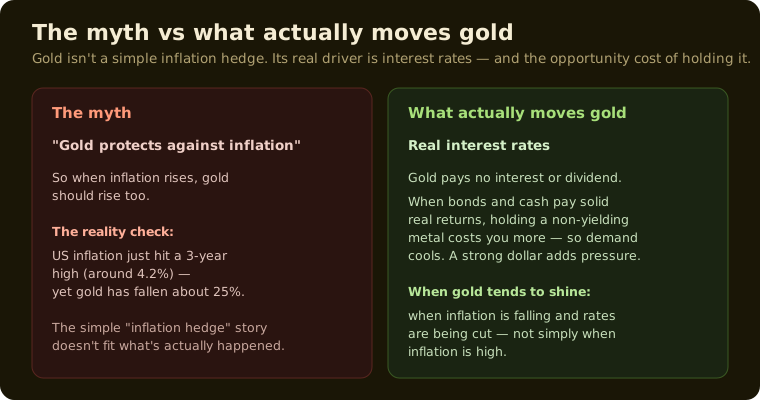
Yet the data tells the opposite story. US inflation recently hit its highest level in about three years, around 4.2%, while gold fell sharply over the same stretch. If gold were a simple inflation hedge, that shouldn’t happen. The mismatch reveals that the popular story is incomplete — gold’s relationship with inflation is far weaker and more conditional than the myth suggests.
So why has gold actually fallen?
The key is that gold pays no interest and no dividend. That makes it highly sensitive to the returns available everywhere else — what economists call the opportunity cost of holding it. When government bonds and cash pay little or nothing in real terms, sitting in gold costs you almost nothing, and it looks attractive. But when bonds offer a meaningful real return and the stock market is generating profits, the cost of parking money in a non-yielding metal rises, and buyers pull back.
The real driver, in other words, isn’t inflation by itself — it’s real interest rates, meaning rates after inflation. When central banks keep rates high (or raise them) and real yields climb, gold tends to struggle. A stronger US dollar, which often accompanies higher rates, adds further pressure because gold is priced in dollars.
What changed in 2026?
The reversal traces back to a chain of events. An energy shock tied to the conflict with Iran — including disruption around the Strait of Hormuz, a critical route for oil and gas — pushed energy prices up, and lingering tariff effects added to the pressure. That drove inflation higher. But instead of cutting interest rates, central banks responded by staying tight to fight rising prices. The European Central Bank raised rates in June, and the US Federal Reserve, under its new chair Kevin Warsh, signaled a firmly hawkish stance, emphasizing that controlling inflation is a deliberate policy priority. With markets now pricing meaningful odds of further rate hikes rather than cuts, real yields rose and the dollar strengthened — a combination that pulled gold lower. Several banks trimmed their forecasts accordingly; Goldman Sachs, for example, cut its end-2026 target from $5,400 to $4,900.
Does this mean gold’s bull run is over?
Not necessarily, and this is where nuance matters. Notably, the steady buyers behind much of gold’s multi-year rise haven’t left: central banks remained net buyers through the decline, adding a net 244 tonnes in the first quarter of 2026 — above their five-year average — with China adding to reserves for many months running and several new national buyers entering the market. That structural demand is still intact. The pullback has played out mostly in the financial layer above it: investor positioning, exchange-traded fund flows, and shifting rate expectations.
It’s also worth noting that most major year-end forecasts still sit above the current price, even after being trimmed, with several banks projecting roughly $4,900 to $5,000. The honest takeaway is that gold tends to shine when inflation is falling and central banks are cutting rates — the mirror image of today’s conditions. So this looks more like a change in the environment than a verdict that gold’s long-term case is broken. Which way it goes next depends largely on what happens with rates and real yields.
The bottom line
Gold has fallen about 25% from its January 2026 record not because inflation disappeared — it hasn’t — but because the real driver, interest rates, turned against it. The “inflation hedge” label is a myth in the sense that it’s far too simple: gold’s true sensitivity is to real yields, and with central banks staying hawkish, those have risen. Whether gold rebounds will hinge on if and when rate cuts return, not on inflation alone.
For more market context, see our explainers on the great rotation into AI hardware and why the S&P 500 fell .
This article is general market context and education, not investment advice, and does not recommend buying or selling gold or any asset. Prices and analyst forecasts are as of late June 2026 and change constantly; analysts disagree about gold’s direction, and past performance does not predict future results.