How a Reddit Inside Joke Sent Wendy's Stock Skyrocketing 28%

A years-old internet joke just moved a real stock by double digits. On June 24, 2026, Wendy’s shares (WEN) skyrocketed as much as 42% intraday and closed up about 28%, after traders on Reddit’s WallStreetBets forum rallied together to “save” the beaten-down burger chain. It wasn’t sparked by earnings or a deal — it grew out of a long-running inside joke that turned into a collective bid. Here’s how a meme became a market event, and why a rally like this is as risky as it is remarkable. (This is news and context, not investment advice — see the note at the end.)
How did a Reddit inside joke move Wendy’s stock?
For years, a running gag among retail traders held that if you blew up a risky bet, “you’ll end up working at Wendy’s.” The burger chain became a kind of mascot for losing trades — familiar, self-deprecating shorthand in online trading culture. So when Wendy’s stock sank to its lowest level in about two decades, that joke flipped into a rallying cry. A since-deleted WallStreetBets post urged members to band together and “save Wendy’s before it’s too late,” and the idea caught fire.
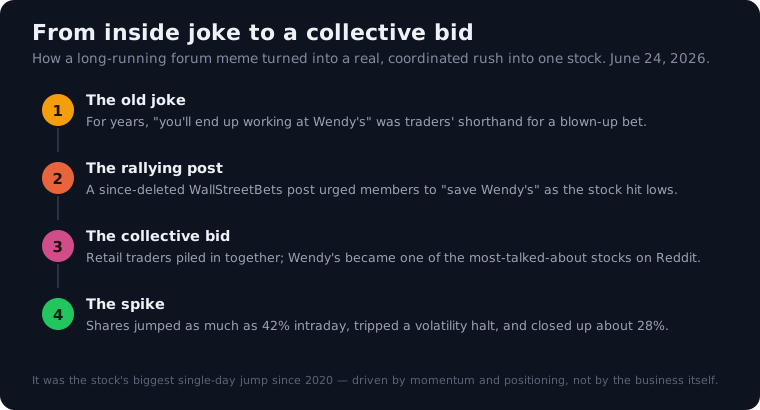
From there it snowballed: retail traders piled in together, Wendy’s became one of the most-mentioned stocks across Reddit’s trading communities, and the buying pressure sent the share price vertical. The surge was sharp enough to trigger a volatility halt on the New York Stock Exchange, and it marked the stock’s biggest single-day jump since 2020 — all set off by a joke rather than any change in the company itself.
What does “save Wendy’s” mean?
The phrase works on two levels. On the surface, it frames Wendy’s as a battered American icon that the retail crowd can rally to rescue. Underneath, it leans on that long-standing “working at Wendy’s” gag, giving the campaign an ironic, in-on-the-joke energy that’s typical of WallStreetBets. That blend of nostalgia and humor is exactly what tends to galvanize these communities — it turns buying a stock into a shared act of internet culture as much as an investment decision. It’s less a calculated thesis than a collective moment, which is part of what makes the outcome so unpredictable.
Why can a collective bid move a stock so much?
The size of the move comes down to a specific setup: Wendy’s was heavily shorted, with roughly 23% to 26% of its available shares sold short.
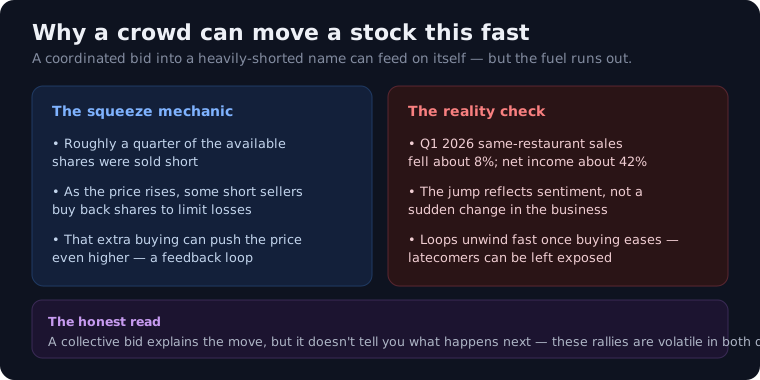
When a stock with that much short interest starts climbing, some short sellers buy shares back to cap their losses — and that extra buying can push the price higher still, in a self-reinforcing loop known as a short squeeze. A coordinated rush of retail buyers can light the fuse. But the same dynamic works in reverse: once the collective buying slows, the loop can unwind just as quickly, and traders who jumped in late are often the ones left exposed when momentum fades. That’s the crucial caveat behind a headline-grabbing percentage gain.
Is there any real news behind Wendy’s jump?
There is a genuine development, even if it doesn’t explain the scale of the move. Wendy’s recently brought in a new chief financial officer with a turnaround reputation, having previously helped drive a major stock recovery at another restaurant chain. That gave the rally a thread of a real story to latch onto. But the fundamentals remain challenged: in the first quarter of 2026, Wendy’s same-restaurant sales fell about 8% and net income dropped roughly 42%, with traffic softening. In other words, the business hasn’t suddenly turned around — the surge is powered by sentiment and positioning far more than performance, which is the heart of what makes a meme-stock move so speculative.
The bottom line
Wendy’s stock jumped about 28% because a long-running Reddit inside joke became a coordinated bid, sending a heavily-shorted, beaten-down stock soaring in a classic short-squeeze pattern. It’s a striking example of how internet culture can move markets — but the rally rests on momentum, not improving fundamentals, and moves like this can reverse as fast as they happen. The smart approach is to understand the mechanics rather than chase the spike.
For the market-mechanics side of the same event, see our fuller look at whether Wendy’s is the next meme stock ; for broader context, see our explainer on the great rotation into AI hardware .
This article is news and general context, not investment advice, and does not recommend buying or selling any security. Stock prices cited are intraday and closing figures from June 24, 2026 and change continuously. Meme-stock moves are highly volatile; never invest money you can’t afford to lose, and consider speaking to a regulated financial adviser if you’re unsure.