UK Heatwave Red Warning: Are Schools Closing, and How to Check

The UK is in the grip of a rare and severe heatwave, with the Met Office issuing a Red Extreme Heat Warning — its highest alert level — as temperatures climb to as high as 38–39°C in parts of England and Wales. With record-breaking June heat and warnings that it poses a risk to life, many parents are asking the same urgent question: are schools closing? The honest answer is that there is no automatic closure and no legal temperature limit that forces schools to shut. Whether to close is decided by each individual school, and while some closed or finished early during the peak, most stayed open with measures to keep children safe. Here’s the full picture, how to check your own child’s school, and how to keep kids safe in the heat.
How hot is the UK heatwave?
This is an exceptional heat event for June. The Met Office issued a Red Extreme Heat Warning, a level reserved for the most severe conditions, covering parts of central and southern England and Wales.
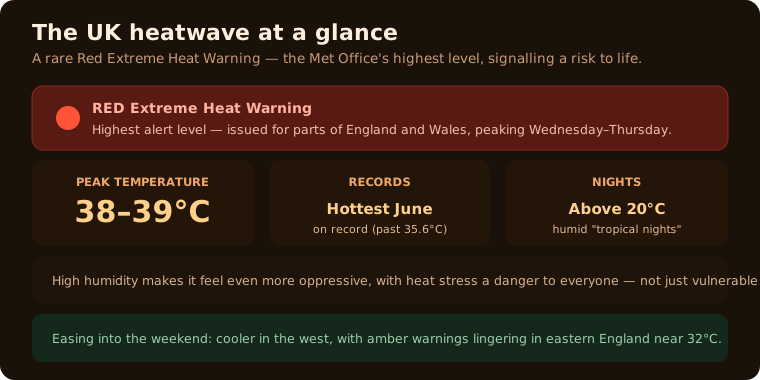
Temperatures peaked on Wednesday and Thursday, reaching as high as 38–39°C, and it is likely the highest June temperature on record — 35.6°C, set back in the 1950s and 1970s — has been broken. Making it harder to cope with, the heat has been paired with unusually high humidity and a run of “tropical nights,” where overnight temperatures don’t fall below 20°C, leaving little chance for the body to recover. The good news is that conditions are easing into the weekend: the west cools first, while amber warnings linger in eastern England with highs around 32°C.
Are schools closing because of the heat?
This is the question on most parents’ minds, and the answer is more nuanced than a simple yes or no. Crucially, there is no legal maximum temperature for schools in the UK — no rule that says classes must stop once it gets too hot. That means there is no national order to close; instead, the decision rests with each school’s head teacher, based on their particular building and circumstances.
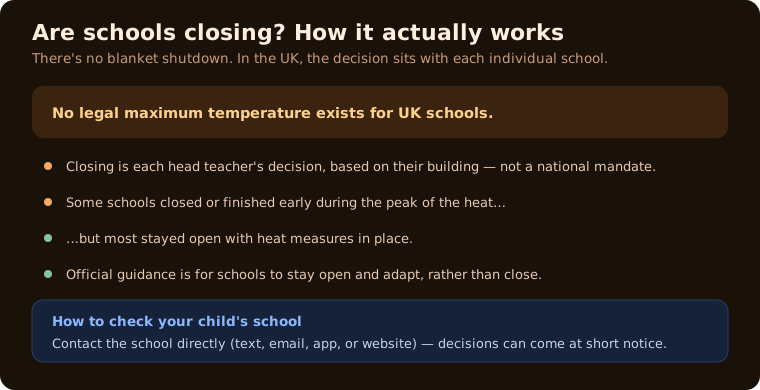
During the peak of this heatwave, some schools across the affected areas did choose to close fully or finish the day early, particularly older buildings that struggle to stay cool. However, the numbers reported varied, and the majority of schools stayed open, following official guidance to put heat-management measures in place rather than shut their doors. Bodies representing head teachers have circulated advice on managing the heat and when closure might be justified, but the consistent message from health and education authorities has been that staying open with sensible adaptations is usually the better course. In short, closures have been the exception rather than the rule.
How can you find out if your child’s school is affected?
Because the decision is made school by school, there is no single national list to rely on, so the most reliable approach is to check directly with your child’s school. Schools that decide to close or adjust their hours will typically notify parents through their usual channels — a text message, email, app notification, or a post on the school website or social media. It’s also worth checking your local council’s website, as some publish updates for their area. Given that decisions can be made at short notice in response to the forecast, it’s sensible to check the evening before or first thing in the morning during the hottest spells, rather than assuming the situation is the same as the previous day.
What do schools do to keep children safe in the heat?
For the many schools that stay open, official guidance sets out a range of measures to protect pupils, who are more vulnerable to heat-related illness than adults. These typically include relaxing uniform rules so children can wear cooler clothing, ensuring pupils have constant access to drinking water and take regular water breaks, and moving lessons into the coolest parts of the building. Schools are also advised to keep blinds and windows managed to limit heat build-up, to reduce or reschedule strenuous outdoor activities and PE away from the hottest part of the day, and to make sure children are protected with shade, hats, and sunscreen when outside. The aim is to allow education to continue while minimising the risk to children’s health.
How can parents keep children safe during the heatwave?
Whether your child is at school or at home, the same heat-safety principles apply, and they’re worth following closely during a warning this severe. Keep children well hydrated by encouraging them to drink plenty of water throughout the day, and dress them in light, loose clothing. Protect them from the sun with a hat, sunscreen, and shade, and try to keep them out of direct sun during the hottest hours, roughly late morning to mid-afternoon. Never leave a child — or anyone — in a parked car, even briefly, as temperatures inside can rise to dangerous levels within minutes. It helps to keep your home cooler by closing curtains and windows on the sunny side during the day and opening up when it’s cooler outside. Finally, learn to recognise the signs of heat exhaustion, such as tiredness, dizziness, headache, and feeling sick, and move the child somewhere cool, give them water, and seek medical help if they don’t improve.
The bottom line
The UK’s Red Extreme Heat Warning marks a genuinely serious weather event, but on the question of schools, the reality is calmer than the headlines suggest: there’s no legal temperature limit and no blanket closure, so most schools have stayed open with measures in place while a minority closed at the discretion of their head teachers. The practical takeaway for parents is to check directly with your child’s school rather than assume, and to focus on the heat-safety basics — hydration, sun protection, and keeping cool — to get children through the hottest days safely.
For more, see our coverage of the Met Office’s 38°C warning and our guide to the best portable air conditioners in the UK .
This article reflects information confirmed during the heatwave of late June 2026; warnings and school decisions can change at short notice, so always check the Met Office and your child’s school for the latest. It is general information, not medical advice.