UAE Visa on Arrival 2026: 6 New Countries Added — Who Qualifies and the Residence-Permit Catch

The UAE has widened its visa-on-arrival scheme — but the headlines bury the catch. From 25 June 2026, ordinary-passport holders from six more countries — Indonesia, Vietnam, Thailand, the Philippines, Kenya and South Africa — can get a UAE visa at the border instead of arranging one in advance. The condition that decides whether this actually helps you: you must already hold a valid residence permit from one of nine wealthy countries. Here’s exactly what changed, who qualifies, and what it costs.
What did the UAE change on 25 June 2026?
The UAE’s immigration authority — the Federal Authority for Identity, Citizenship, Customs and Ports Security (ICP), with the Ministry of Foreign Affairs — expanded its conditional visa-on-arrival list on two fronts at once:
- Six new nationalities added (ordinary passports): Indonesia, Vietnam, Thailand, the Philippines, Kenya and South Africa.
- Six more “countries of residence” added — Singapore, Japan, South Korea, Australia, New Zealand and Canada — on top of the United States, the EU and the UK that already counted.
The announcement was published on 25 June 2026 and reported as effective from that date; no separate start date was given. India was already eligible under the scheme before this change.
Who actually qualifies? The residence-permit catch
This is the part the headlines skip: being a citizen of the six countries is not enough on its own. To get the visa on arrival you must also hold a valid residence permit from one of nine approved places.
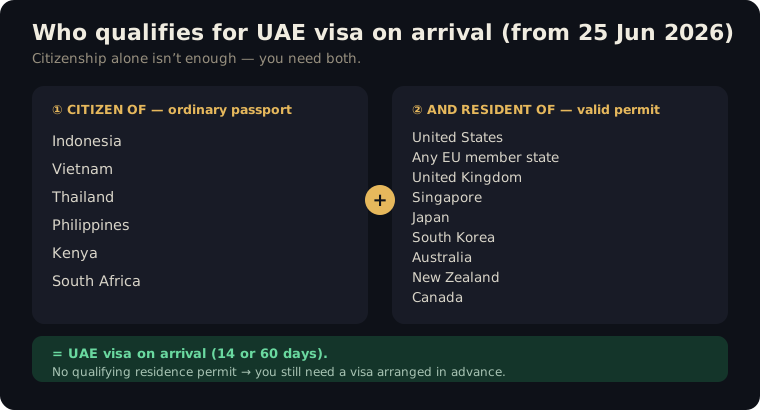
The nine qualifying countries of residence are: the United States, any EU member state, the United Kingdom, Singapore, Japan, South Korea, Australia, New Zealand and Canada. The permit must be valid at the time you travel.
In practice the scheme targets the diaspora — think a Filipino professional living in Canada, or an Indonesian resident in Japan. A citizen of those six countries without one of these residence permits still has to arrange a UAE visa in advance. Accompanying family members are covered, provided they meet the same conditions.
How much does it cost and how long can you stay?
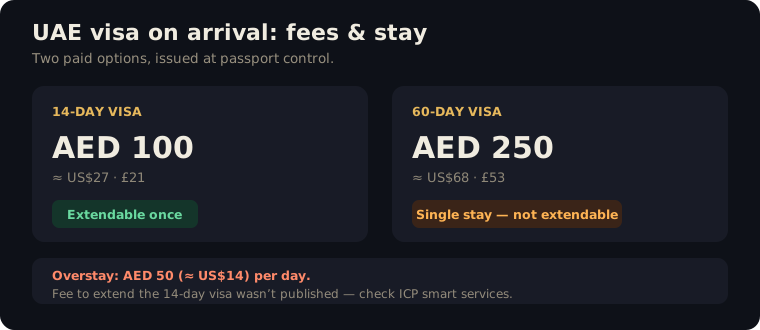
There are two paid options, both issued at passport control:
| Option | Fee | Stay | Extendable? |
|---|---|---|---|
| Short visa | AED 100 (≈ US$27 / £21) | 14 days | Yes — once, in-country |
| Long visa | AED 250 (≈ US$68 / £53) | 60 days | No — single stay |
Overstaying costs AED 50 (≈ US$14) per day, and you must leave when the visa expires. (Dirham fees are official; the dollar and pound figures are approximate. The fee to extend the 14-day visa wasn’t published in the official announcement, so check ICP’s smart services before relying on it.)
How does it work at the airport?
You don’t apply online first. At passport control on arrival — at Dubai (DXB), Abu Dhabi (AUH) or Sharjah (SHJ) — you present your ordinary passport and your qualifying residence permit, tell the officer whether you want the 14-day or 60-day visa, pay the fee, and the visa is issued after the usual checks. Travel services note your passport and the residence permit should generally have at least six months’ validity, though that wasn’t spelled out in the official statement — so confirm before you fly.
Why is the UAE doing this?
The government framed the move as making travel easier and strengthening economic, cultural and people-to-people ties with the six countries — part of a broader push to simplify entry and grow tourism and non-oil sectors. The Philippines is a notable winner: the UAE hosts around 660,000 Filipino residents, one of the largest overseas Filipino communities in the world, and Manila’s foreign ministry welcomed the change.
The bottom line
If you’re a citizen of Indonesia, Vietnam, Thailand, the Philippines, Kenya or South Africa and you live in the US, the EU, the UK, Singapore, Japan, South Korea, Australia, New Zealand or Canada, you can now skip the pre-arranged UAE visa and get one at the border from as little as AED 100. If you don’t hold one of those residence permits, nothing changes for you yet — you’ll still need to arrange a visa before travelling.