How to Tell If You Need a Lawyer After a Car Accident (and What One Actually Does)

After a car accident, one of the first questions people ask is whether they need a lawyer — and the honest answer is: not always. You are not legally required to hire one, and for a truly minor fender-bender you may be fine on your own. But once injuries, disputed fault, or an uncooperative insurer enter the picture, legal help can make a real difference. Here’s how to tell which situation you’re in, what a car accident lawyer actually does, and what it costs. (This is general information, not legal advice — see the note at the end.)
Do you legally need a lawyer after a car accident?
No. There is no law requiring you to hire an attorney to file an insurance claim or pursue compensation, and you can represent yourself at any stage. Hiring a lawyer doesn’t guarantee a particular outcome either. What it can do is shift the investigation, paperwork, and negotiation onto someone who does this for a living — which matters more in some situations than others.
When can you handle a car accident claim yourself?
You may not need a lawyer when the accident is genuinely simple. The common signs you can likely manage a claim on your own:
- The only damage was to vehicles, with no injuries to anyone.
- Fault is clear and the other driver’s insurer accepts it.
- The insurer is cooperating and offering an amount that fairly covers your repairs.
- You don’t feel pressured to sign anything quickly.
In those cases, the claim is mostly administrative. Even then, many lawyers offer a free consultation, so it costs nothing to get a professional opinion before you sign — and consulting one doesn’t obligate you to hire them.
How do you tell if you need a lawyer after a car accident?
The clearest signal is injury. If you or a passenger were hurt — especially anything needing ongoing treatment, surgery, or hospitalization — the stakes rise quickly, and so does the value of legal help.
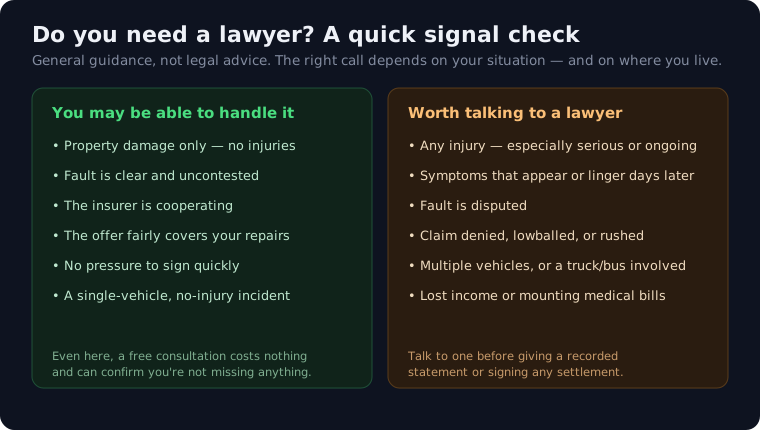
Beyond serious injury, these are the situations where it’s worth talking to a lawyer:
- Delayed or lingering symptoms. Injuries like whiplash or soft-tissue damage can surface days later; if you’re still not feeling right after about a week, get checked and consider advice.
- Disputed fault. If the other side blames you, or the insurer’s view differs from the police report, an attorney can help establish what actually happened.
- A denied, lowball, or rushed offer. Insurers may deny claims or push a fast settlement before the full cost of your injuries is known. Once you sign a release, you typically can’t ask for more later.
- Multiple parties or a commercial vehicle. More vehicles — or a truck or bus — usually means more complexity and more insurers.
- Lost income or mounting bills. If the crash is costing you wages or leaving you with bills the other driver’s policy won’t cover, legal help is worth considering.
A simple rule of thumb: if the accident is truly minor and the claim is straightforward, you may not need a lawyer; if injuries, disputed responsibility, or settlement pressure appear, it’s worth speaking to one before you settle. And as a rule, talk to an attorney before giving a recorded statement to an adjuster or signing any settlement.
What exactly does a car accident lawyer do?
Most of a car accident lawyer’s work happens long before any courtroom. Their job runs across the whole life of a claim.
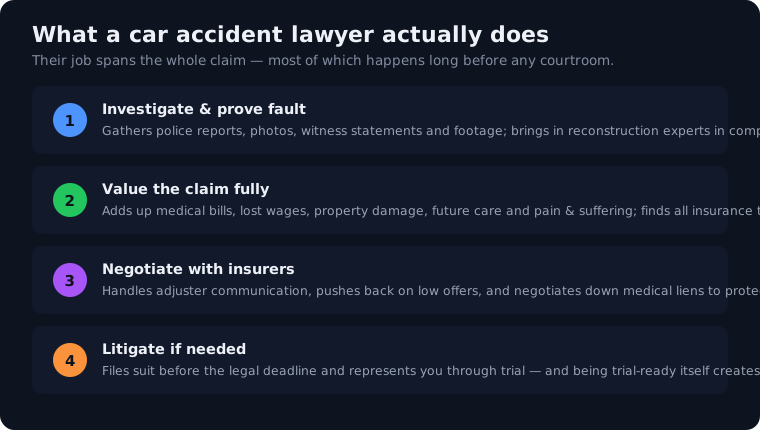
| Phase | What it involves |
|---|---|
| Investigate & prove fault | Police reports, photos, witnesses, footage; reconstruction experts in complex cases |
| Value the claim | Medical bills, lost wages, property damage, future care, pain & suffering; finding all coverage |
| Negotiate | Handling insurer communication, countering low offers, reducing medical liens |
| Litigate if needed | Filing suit before the deadline and representing you through trial |
In practice, that means investigating the crash and gathering evidence of negligence; reviewing medical records and projecting future treatment costs that early insurance estimates often miss; calculating the full range of damages, both economic (bills, lost wages) and non-economic (pain and suffering); managing all communication with adjusters so a stray comment doesn’t undercut your claim; and negotiating down medical liens so more of any settlement stays with you. If a fair deal can’t be reached, they file a lawsuit and represent you through trial — and the simple fact that a lawyer is prepared to go to court often pushes insurers toward a better offer. Throughout, an attorney is ethically bound to act in your best interests.
How much does a car accident lawyer cost?
Most personal injury lawyers work on a contingency fee, meaning they’re paid only if you recover money — they take a percentage of the award rather than charging hourly. That percentage is commonly around a third, and typically falls in the 25–40% range. Case costs such as expert witnesses, court filing fees, and obtaining records may be billed separately from that percentage, so it’s worth asking how those are handled up front. Initial consultations are frequently free.
How long do you have to take action?
Every U.S. state sets a statute of limitations — a deadline to file a lawsuit after a crash — and missing it can end your right to sue. In many states that window is around two years, but it varies, minors often get longer, and exceptions exist. Just as important, evidence fades fast: police body-camera and traffic-camera footage can be overwritten within weeks, and witness memories blur. Acting sooner protects both your deadline and your evidence.
A crucial caveat: the rules above reflect how this generally works in the United States. If you’re elsewhere, the terminology, deadlines, fault rules, and fee structures can be entirely different — so always check the law where your accident happened.
The bottom line
You don’t need a lawyer for every car accident — a minor, no-injury crash with a cooperative insurer is often something you can handle yourself. But injuries, disputed fault, or a pressured settlement are clear signals to at least get advice, and since consultations are usually free, the downside of asking is small. If you do hire one, their value is in investigating, valuing your claim fully, and negotiating from a position of strength — work that’s hard to replicate on your own while you’re trying to recover. Once you decide to move forward, our companion guide covers what a car accident lawyer does to protect your rights and the questions to ask before you hire one . If you are in Arizona, we also list 12 established Phoenix firms and how to check them yourself .
This article is general information, not legal advice, and does not create an attorney-client relationship. Laws and procedures vary significantly by country and by state. For guidance on your specific situation, consult a licensed attorney in your jurisdiction.