India Passport Fees Rise 1 July 2026: New Rates and How to Save by Applying Before the Hike

India’s passport fees go up on 1 July 2026 — the first increase in about 14 years — and applying before then can save you ₹1,000 to ₹2,500. A fresh 36-page passport rises from ₹1,500 to ₹2,500, with Tatkal and 60-page books going up too. Here are the new rates, what else has actually changed (and what’s just a rumour), and how to lock in the old fee before the deadline.
How much are India’s new passport fees from 1 July 2026?
The Ministry of External Affairs notified the Passports (Amendment) Rules, 2026 (gazetted 20 June 2026), raising fees from 1 July 2026. Fresh applications and reissues/renewals cost the same. The headline changes:
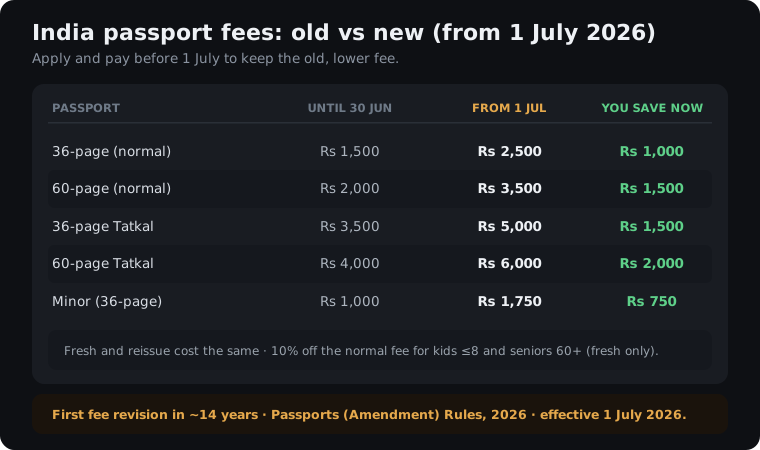
| Passport | Until 30 Jun | From 1 Jul | You save by applying now |
|---|---|---|---|
| 36-page (normal) | ₹1,500 | ₹2,500 | ₹1,000 |
| 60-page (normal) | ₹2,000 | ₹3,500 | ₹1,500 |
| 36-page Tatkal | ₹3,500 | ₹5,000 | ₹1,500 |
| 60-page Tatkal | ₹4,000 | ₹6,000 | ₹2,000 |
| Minor (36-page) | ₹1,000 | ₹1,750 | ₹750 |
Lost or damaged replacements and overseas (USD) fees rose too. A 10% discount on the normal fee still applies to fresh applications for children up to age 8 and senior citizens over 60.
How do you save money by applying before 1 July?
The fee you pay is set when you submit and pay for your application online — not by your appointment date or the date the passport is issued. Online payment is required before you can book a Passport Seva Kendra slot, so if you complete payment before 1 July 2026 you pay the old, lower fee even if your appointment falls later. To be safe, finish your online payment by 30 June. Depending on the booklet and category, that’s ₹1,000 to ₹2,500 saved.
What about Tatkal (fast-track) passports?
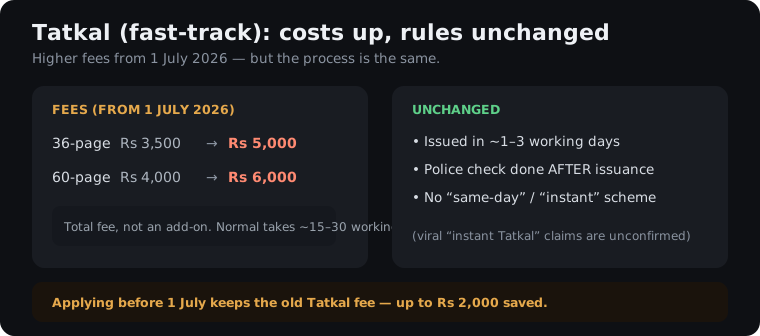
Tatkal fees rise as well — 36-page from ₹3,500 to ₹5,000, 60-page from ₹4,000 to ₹6,000 (these are the total fee, not an add-on). But the Tatkal mechanics are unchanged: it’s still issued in about 1 to 3 working days (versus roughly 15 to 30 for a normal application), with police verification carried out after the passport is issued. Despite viral claims, there is no official new “same-day” or “instant” Tatkal scheme.
What other India passport rules have changed — and what’s just a rumour?
Several real changes get lumped in with the July 2026 fee hike but actually arrived earlier. Here’s the accurate picture:
- E-passports: all passports issued in India are now chip-enabled e-passports (rolled out from May 2025, and automatic on all new applications since November 2025). There’s a small gold symbol on the cover and an RFID chip in the back page; the fee is the same, and older non-chip passports stay valid until they expire.
- Birth certificate as date-of-birth proof — this applies only to people born on or after 1 October 2023 (from the 2025 rules). If you were born before that date, you can still use a PAN card, school or matriculation certificate, driving licence and so on.
- Last-page changes: your home address and your parents’ names are no longer printed on the last page; the address now sits in a scannable chip/barcode instead.
Myths to ignore: “Aadhaar is now mandatory for a passport” is wrong — Aadhaar is in fact not accepted as date-of-birth proof, though it still works for identity and address. And a widely shared “new passport rules from 15 February 2026” package has no government notification behind it.
How to apply
Apply on the Passport Seva portal (passportindia.gov.in) or the mPassport Seva app: register, fill in the form, pay the fee online, and book a Passport Seva Kendra (or Post Office PSK) appointment, then attend with your original documents. Remember — complete the online payment before 1 July 2026 to keep the old fee, and always confirm the exact amount on the official fee calculator before you pay.
If you’re getting your travel documents in order for a trip, it’s worth checking entry rules at your destination too — for example, our guide to the UAE visa on arrival expansion .