Can a Daily Drink Help Lower Your Cholesterol After Menopause?

If you’ve read that a certain drink can lower your cholesterol after menopause, here’s the honest version: no single drink is a cure, but a few — most notably soy milk and green tea — have real research behind a modest benefit when they’re part of an overall heart-healthy diet. That matters more after menopause, because falling estrogen tends to push “bad” cholesterol up and heart risk along with it. Below is what the evidence actually shows, and what it doesn’t. (This is general information, not medical advice — see the note at the end.)
Why does cholesterol rise after menopause?
Estrogen helps the body keep cholesterol in a healthy range. As estrogen drops during and after menopause, LDL (“bad”) cholesterol tends to rise while HDL (“good”) cholesterol often falls — a shift that raises the risk of cardiovascular disease. It’s significant enough that major heart organizations treat menopause itself as a female-specific cardiovascular risk factor. In practical terms, the years around menopause are an important time to pay attention to heart health, which is exactly why the question of helpful (and harmful) drinks comes up so often.
Can a drink really lower cholesterol after menopause?
Yes, a little — but it’s important to set expectations. No beverage works like a medication, and drinking one thing won’t undo an otherwise unhealthy diet. What the research supports is that certain drinks can nudge your cholesterol in the right direction as one part of a broader pattern that includes fiber, healthy fats, exercise, and, when prescribed, medication. The drink with the most evidence is soy milk.
Soy milk: the most-studied option
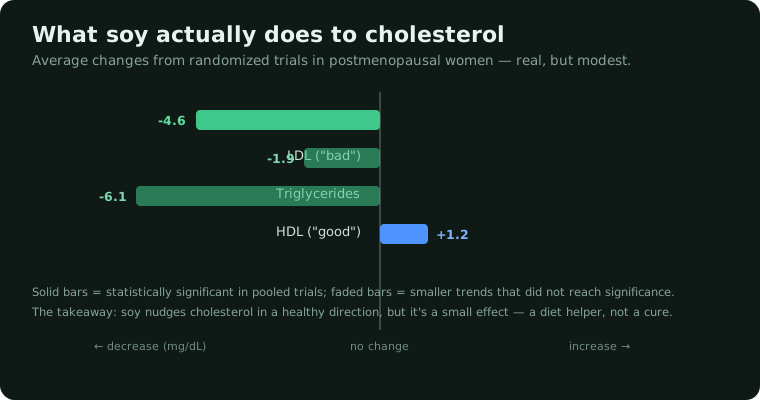
Soy has been studied for cholesterol for decades, and while early results were genuinely mixed, recent pooled analyses lean positive. A systematic review of randomized trials found that soy protein and isoflavones produced a small but statistically significant drop in total cholesterol and a slight rise in HDL, with smaller, less certain improvements in LDL and triglycerides.
| Measure | Average change |
|---|---|
| Total cholesterol | about −4.6 mg/dL |
| HDL (“good”) | about +1.2 mg/dL |
| LDL (“bad”) | about −1.9 mg/dL (smaller trend) |
| Triglycerides | about −6.1 mg/dL (smaller trend) |
As the chart shows, these are modest shifts, not dramatic ones — which is the honest takeaway. Soy is a helper, not a cure. Even U.S. regulators have long allowed that soy protein, within a diet low in saturated fat, may reduce heart-disease risk by lowering blood cholesterol. The practical move is using unsweetened soy milk in place of higher-saturated-fat options, rather than simply adding it on top of everything else.
What about green tea?
Green tea is the other drink with supportive evidence. In a controlled trial in healthy postmenopausal women, green-tea catechins (the compound EGCG, at doses roughly equivalent to several cups a day) were associated with improvements in lipid and glucose measures. The evidence here is suggestive rather than conclusive, and a couple of cups of unsweetened green tea is a low-risk habit for most people. One caution: very high-dose green-tea extract supplements are a different matter and have been linked to rare liver issues, so the drink is the safer route than concentrated pills.
What drinks should you limit?
The flip side matters just as much as what you add.
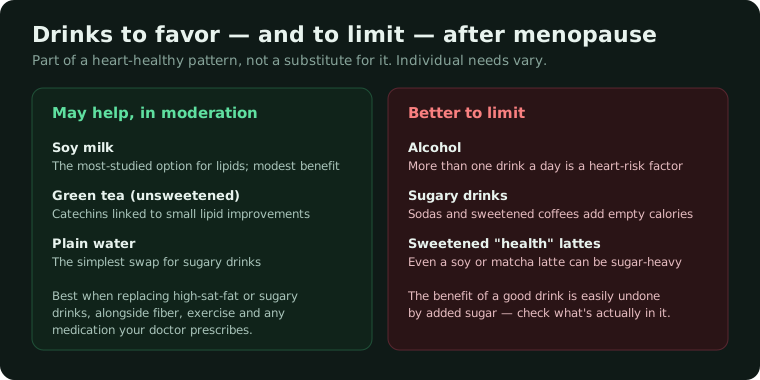
Alcohol is the big one: more than one drink a day for women is considered a cardiovascular risk factor, so limiting it — or skipping it — supports heart health. Sugary drinks, including sodas and sweetened coffee drinks, add calories without benefit. And watch the “health halo”: a soy or matcha latte loaded with syrup can easily cancel out any advantage the base ingredient offered. Checking what’s actually in your cup is often more impactful than chasing a miracle beverage.
The bottom line
A drink can play a small, supporting role in managing cholesterol after menopause — soy milk has the most evidence, green tea adds a suggestive boost, and plain water is a reliable swap for sugary options. But the effects are modest, and no drink replaces the fundamentals: a fiber-rich, lower-saturated-fat diet, regular activity, and the cholesterol medication your doctor may recommend. Think of a smart drink choice as one helpful piece of the puzzle, not the whole picture.
For more on everyday heart-healthy eating, see our look at the protein move on fast-food menus .
This article is general information, not medical or dietary advice, and isn’t a substitute for care from a professional. Cholesterol and heart health after menopause are individual — talk to your doctor or a registered dietitian before making changes, especially if you have high cholesterol, take statins or other medication, or have other health conditions.