How Car Accident Lawyers Protect Your Rights — Plus the Questions to Ask Before You Hire One
A serious crash leaves you doing two jobs at once: healing from your injuries, and fighting a billion-dollar insurance industry that does this every single day. You’re in a hospital bed; the other side’s adjuster is at a desk, trained to close your claim for as little as possible. That imbalance is the whole reason car accident lawyers exist.
This guide breaks down two things every injury victim should understand before signing anything: what a car accident lawyer actually does to protect your rights, and the exact questions to ask an attorney before you hire them.
What a Car Accident Lawyer Actually Does to Protect Your Rights
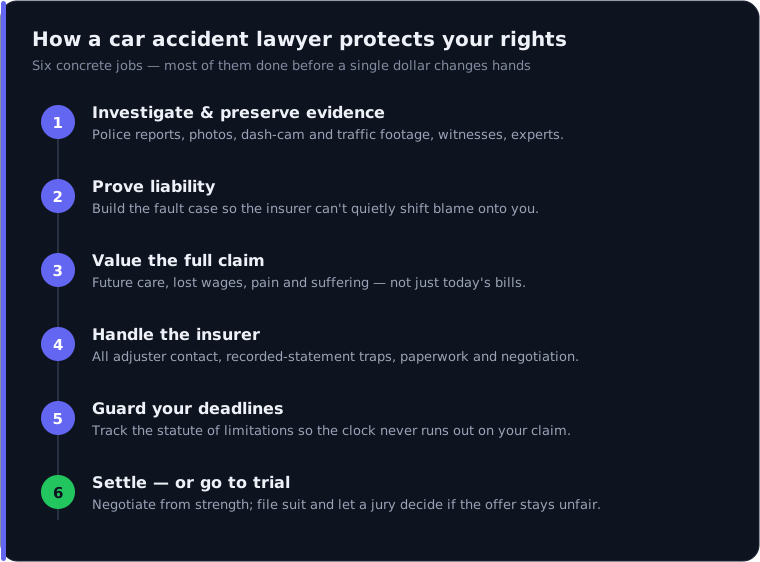
“Hiring a lawyer” can sound abstract. In practice, a good car accident attorney is doing six concrete jobs on your behalf — most of them before a single dollar changes hands.
Investigating the crash and preserving evidence
Evidence disappears fast. Skid marks fade, vehicles get repaired or scrapped, surveillance footage is overwritten, and witnesses forget. A lawyer moves quickly to lock it down: the police report, photos, dash-cam and traffic-camera footage, witness statements, and — when needed — accident-reconstruction or medical experts. The stronger this record, the harder it is for an insurer to dispute what happened.
Proving liability — and protecting you from the blame game
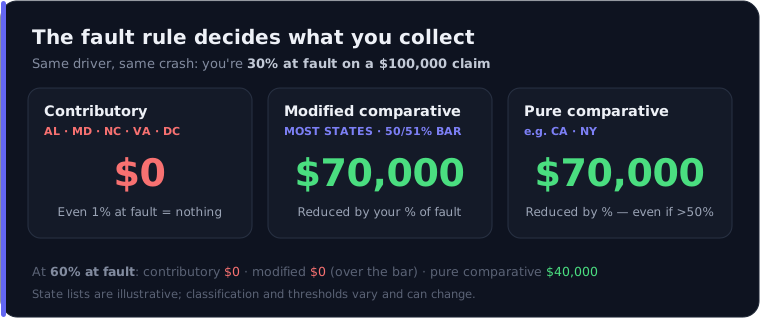
Insurers know that shifting even part of the blame onto you can shrink or erase your payout. How much it hurts you depends on your state’s fault rule. Most states use some form of comparative negligence, where your compensation is reduced by your share of fault. A handful — including Alabama, Maryland, North Carolina, Virginia, and Washington, D.C. — still apply the much harsher contributory negligence rule, where being even 1% at fault can bar you from recovering anything at all. A lawyer’s job is to build the liability case so the other side can’t quietly pin the crash on you.
Calculating the full value of your claim
Most people dramatically undervalue their own case because they only count what they can see today: the ER bill and the bent fender. A lawyer values the whole picture — future medical care, lost wages, reduced earning capacity, and non-economic damages like pain, suffering, and loss of enjoyment of life. Settling before you know your long-term prognosis is one of the most expensive mistakes an injury victim can make.
Dealing with the insurance company
Once you’re represented, the insurer talks to your lawyer, not to you — which shuts down the tactics designed to catch you off guard. That includes the recorded statement (often used to twist your words), the friendly early phone call, and the fast lowball offer that arrives before you understand how hurt you really are. Your attorney handles the adjusters, the paperwork, and the negotiation.
Protecting your deadlines
Every state sets a statute of limitations — a hard deadline to file a lawsuit. Most fall between two and three years from the date of the crash, but the range runs from as little as one year (Kentucky, Louisiana, and Tennessee) to as long as six. Claims against a government entity often have far shorter notice deadlines, sometimes just a few months. Miss the deadline and your case is over, no matter how strong it was. A lawyer tracks these dates so the clock never runs out on you.
Negotiating a settlement — or taking it to trial
Most car accident claims settle out of court. But the size of a settlement often depends on whether the insurer believes you’re actually willing and able to go to trial. An attorney with real courtroom experience negotiates from a position of strength; if the offer stays unfair, they can file suit and let a jury decide.
Why Handling It Yourself Is Risky
You can absolutely file your own claim — and for a minor fender-bender with no injuries, that may be the sensible choice. The risk rises sharply the moment real injuries are involved, because the insurance company’s incentives are the opposite of yours.
Three tactics catch unrepresented victims again and again: the quick lowball, an offer that lands while you’re still in shock and before the full cost of your injuries is known; the recorded statement, where an innocent “I’m feeling okay” becomes evidence that you weren’t really hurt; and the blame shift, where the adjuster works to assign you just enough fault to cross your state’s threshold and reduce — or eliminate — what they owe.
The chart below shows why that last tactic is so powerful. The same 30%-at-fault driver walks away with wildly different outcomes depending only on which fault rule their state follows.
How Contingency Fees Work (So Hiring Costs Nothing Upfront)
The single biggest reason injury victims hesitate to call a lawyer is money — and it’s largely a misunderstanding. Nearly all car accident attorneys work on contingency: no win, no fee. You pay nothing upfront, and the lawyer only gets paid if they recover money for you.
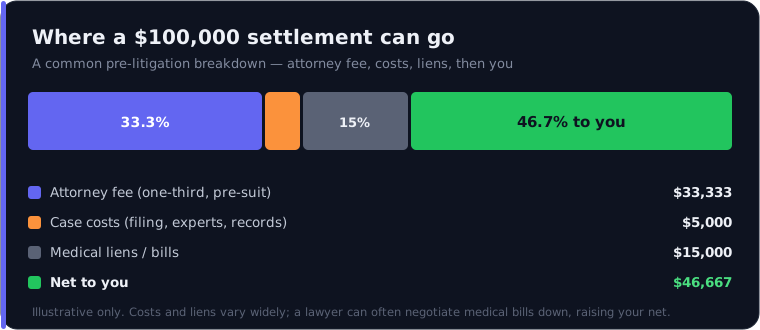
The percentage is fairly standardized across the industry. The common structure is about one-third (33⅓%) of the recovery if your case settles before a lawsuit is filed, rising to roughly 40% if the case goes into litigation, because that stage demands far more work. Some agreements climb higher for a full trial or appeal.
Two things are worth knowing. First, case costs are separate from the fee — expenses like court filing fees, expert witnesses, and medical records come out of the recovery in addition to the percentage. Second, the settlement check is paid out in a set order: attorney fee first, then case costs, then any medical liens, and finally you. A good lawyer will often negotiate your medical bills down, which puts more money back in your pocket.
Always get the agreement in writing, and remember that fees are negotiable — many states legally require attorneys to tell you so.
Questions to Ask a Car Accident Attorney Before You Hire Them
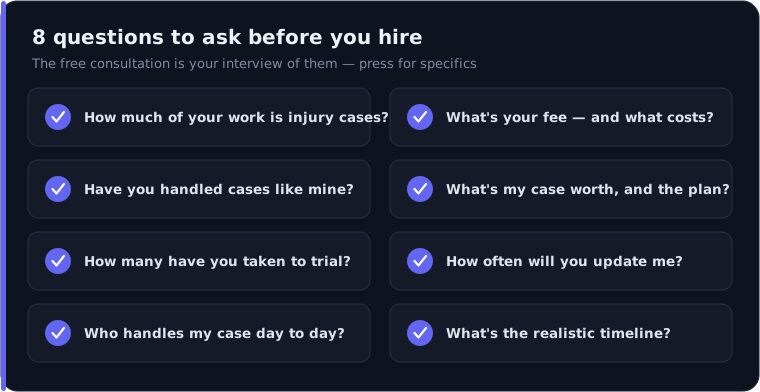
A free consultation runs both ways: it’s your interview of them. The right questions separate a lawyer who will protect your case from one who will quietly let it be undervalued.
- What share of your practice is car accident or personal injury cases? A firm that does this every day knows the adjusters, the defense lawyers, and the playbook. A general practice may not.
- Have you handled cases like mine, and how did they turn out? Experience with your specific type of injury and circumstances matters more than a glossy ad.
- How many cases have you taken to trial, and what were the results? Settlement skill is great, but insurers pay more to lawyers they believe will actually try the case.
- Who will actually handle my case day to day? Some firms sign you with a senior name, then hand the work to a junior associate or paralegal. Find out who negotiates your claim and who you’ll reach when you call.
- How do you charge, and what costs would I be responsible for? Confirm the contingency percentage, how it changes if you go to litigation, and how case costs are handled — win or lose.
- What do you think my case is worth, and what’s your strategy? A good lawyer will give a realistic range and a plan, while being honest that an exact figure isn’t possible until the investigation and your medical prognosis are clear.
- How and how often will you update me? Poor communication is the most common complaint clients have about lawyers. Ask whether you’ll get updates by phone, email, or a client portal — and how often.
- What’s the realistic timeline for my case? Understanding whether this is a months-long or years-long process sets expectations from day one.
Red Flags to Watch For
Some answers should make you keep looking. Be cautious of any attorney who guarantees a specific dollar amount at the first meeting, is vague about who will actually do the work, pressures you to sign immediately, won’t put the fee agreement in writing, is hard to reach even during the courtship phase, or makes it clear they never take cases to trial.
The Bottom Line
A car accident lawyer’s real value isn’t a single courtroom moment — it’s the steady protection of your rights at every step: preserving evidence, proving fault, valuing your claim accurately, neutralizing insurer tactics, and guarding your deadlines, all while you focus on recovering. Because the work is done on contingency, the meaningful question usually isn’t “can I afford a lawyer?” but “can I afford to face the insurance company without one?” Use the free consultation, ask the questions above, and choose the attorney who answers them with specifics.
Frequently Asked Questions
Do I really need a lawyer for a minor car accident? Not always. For a low-speed crash with no injuries and clear fault, you may be able to handle the property-damage claim yourself. The calculus changes once there are injuries, disputed fault, multiple vehicles, or a serious gap between the offer and your actual costs.
How much does a car accident lawyer cost? Typically nothing upfront. Most work on contingency — commonly around one-third of the recovery if the case settles before a lawsuit, and roughly 40% if it goes into litigation. Case costs are usually separate, and if there’s no recovery you generally owe no attorney fee.
How long do I have to file a car accident claim? It depends on your state. Most give you two to three years from the date of the crash, but some allow as little as one year, and claims involving a government entity can have much shorter notice deadlines. Because missing the deadline ends your case, it’s worth confirming early.
What happens if I was partly at fault? In most states you can still recover, with your compensation reduced by your percentage of fault. In a few states that follow strict contributory negligence, being even slightly at fault can bar recovery entirely — which is exactly why proving liability matters so much.
How long will my case take? Anywhere from a few months to a few years. Straightforward claims with clear liability and completed medical treatment resolve faster; serious injuries, disputed fault, or litigation take longer.
Will my case go to trial? Probably not — most car accident claims settle out of court. But hiring a lawyer who is genuinely prepared to try the case is often what pushes an insurer to make a fair offer in the first place.
This article is general information, not legal advice. Laws and deadlines vary significantly by state and change over time, and every case is different. For guidance on your specific situation, consult a licensed attorney in your jurisdiction.