Apple Is Raising Prices Over the Memory Shortage. Here's Why It Can Afford To

Apple has confirmed that price increases on its products are coming, with CEO Tim Cook calling them “unavoidable” because the AI-driven memory shortage has sent chip costs soaring. He didn’t say which products would rise, by how much, or when — but the iPhone 18 lineup is due in September, and Apple has already quietly raised the price of some Macs. The bigger story underneath is why Apple, of all companies, can pass these costs on: its loyal, premium user base gives it pricing power that most rivals lack. Here’s what’s confirmed, what’s still speculation, and why Apple can do this. (This is news and context, not financial advice — see the note at the end.)
Why is Apple raising prices?
The cause is the worldwide memory crunch created by artificial intelligence. AI data centers consume enormous amounts of memory, and each new generation of AI chip packs in more, draining supply from the three companies that make most of the world’s memory: Micron, SK Hynix, and Samsung.
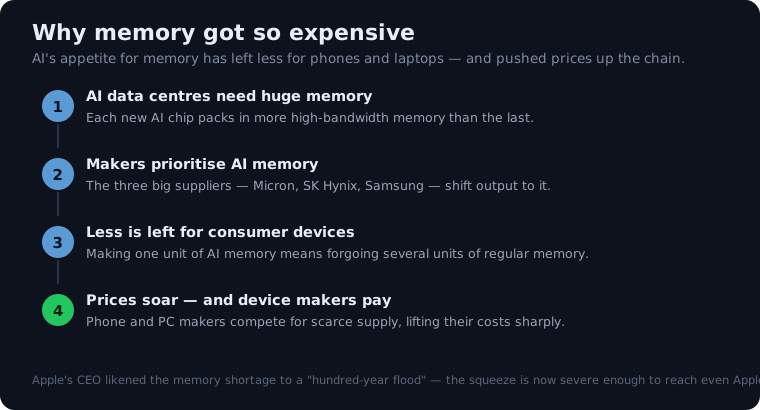
When those suppliers prioritize the high-bandwidth memory that AI servers need, they produce less of the conventional memory that phones and laptops use — and because making AI memory means forgoing several units of regular memory, supply for consumer devices has tightened and prices have jumped. Apple is one of the largest memory buyers in the world, but it’s now caught in that squeeze, paying far more for the DRAM and storage its devices need. Worse, Apple also needs to add more memory to its devices to power new AI features, increasing its demand at exactly the wrong moment. Cook described the situation as a “hundred-year flood,” saying he’d never seen anything like it in over 40 years.
Which Apple products will cost more, and by how much?
Here’s where it’s important to separate fact from speculation, because the specifics haven’t been confirmed.
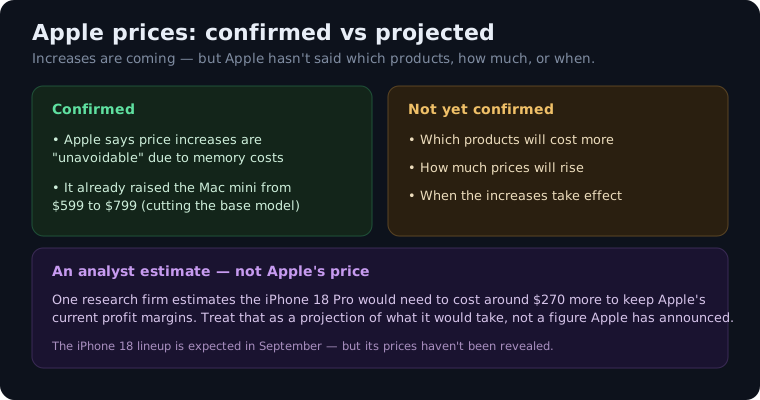
| Status | |
|---|---|
| Price increases are coming | Confirmed by Apple |
| Mac mini raised $599 → $799 | Already happened |
| Which products will rise | Not confirmed |
| How much / when | Not confirmed |
| iPhone 18 Pro ~$270 more | Analyst estimate only |
What’s confirmed is that increases are coming, and that Apple has already raised the Mac mini from $599 to $799 by eliminating its cheapest model, while trimming some higher-end Mac options. What’s not confirmed is the detail: Cook specifically declined to say which products will be affected, by how much, or when. You may see a figure of around $270 more for the iPhone 18 Pro circulating — but that’s an estimate from a research firm of what it would take for Apple to maintain its current margins, not a price Apple has announced. The iPhone 18 lineup, reportedly including the Pro, Pro Max, and Apple’s first foldable iPhone, is expected in September, but its pricing remains unknown.
How does Apple’s loyal user base let it raise prices?
This is the part that makes Apple different. Most companies that raise prices risk losing customers to cheaper competitors. Apple has unusual protection from that, because of how loyal and locked-in its customers are. The ecosystem — iMessage, the App Store, AirPods, Apple Watch, iCloud, and the way Apple devices work seamlessly together — creates real switching costs, so customers tend to absorb higher prices rather than jump to a rival. That brand loyalty gives Apple the pricing power to pass increased costs through to buyers with far less of the demand drop a less-loved brand would suffer. It’s why analysts often talk about Apple “flexing” its pricing power. That said, there’s a limit: the fact that even Apple now says increases are unavoidable is itself a signal of how severe the crunch has become, and no amount of loyalty makes a company immune to it forever.
Is the memory shortage affecting other companies too?
Very much so — Apple is just the most visible example. Several major firms have already raised prices in response to memory costs, including Samsung, Microsoft, Sony, and Dell. Microsoft and Meta have both flagged billions of dollars in higher component costs feeding into their spending plans — the same AI infrastructure boom that’s left Meta with “excess” compute it now wants to sell . Industry analysts expect the squeeze to worsen, with significant shortfalls in memory for both PCs and smartphones projected for 2027. In other words, this isn’t an Apple problem — it’s an industry-wide one, driven by the same AI demand that’s lifting memory makers’ fortunes.
Will Apple prices come back down later?
This is the open question, and it’s worth being honest about. The memory shortage is expected to persist, with the supply squeeze likely running for years rather than months as AI demand stays strong. Whether companies actually lower prices once memory supply normalizes is far from guaranteed — historically, prices that go up for “temporary” reasons have a way of staying up. So while it’s possible that today’s increases ease in time, it would be unwise to count on it.
The bottom line
Apple has confirmed that price increases are coming because the AI memory crunch has made chips far more expensive, and it’s already nudged some Mac prices higher. The specifics for the iPhone 18 and other products haven’t been announced, so treat any exact figure as a projection for now. What’s clear is that Apple’s loyal, locked-in user base gives it the rare ability to pass these costs on — and that even Apple feeling the squeeze shows just how far the AI memory shortage now reaches.
For more on the other side of this story, see our coverage of Micron’s record earnings and the great rotation into AI hardware .
This article is news and general context, not financial or purchasing advice. Details reflect statements and reporting as of late June 2026; specific product prices had not been announced at the time of writing and any figures cited are analyst estimates, not confirmed prices.