2026 FIFA World Cup: Group Stage Tiebreakers and How Third-Place Teams Advance
The 2026 World Cup is the biggest ever — 48 teams, 12 groups, and a brand-new Round of 32. That expansion changes one thing fundamentally: finishing third in your group is no longer the end of the road. With eight of the twelve third-placed teams advancing, a single goal — or even a single yellow card — can decide who plays on. Here’s exactly how teams reach the knockout rounds, the tiebreaker order, and how the best third-placed teams are chosen.
The new 2026 World Cup format
For the first time, the World Cup has 48 teams (up from 32, the format used since 1998), split into 12 groups of four — Groups A through L. Each team plays the other three in its group once, earning three points for a win, one for a draw and none for a loss. The top two from every group advance automatically — that’s 24 teams — and they’re joined by the eight best third-placed teams to complete a 32-team knockout bracket. That creates a new opening knockout round, the Round of 32, ahead of the Round of 16, quarter-finals, semi-finals and final. One consequence: a team that reaches the final now plays eight matches instead of seven.
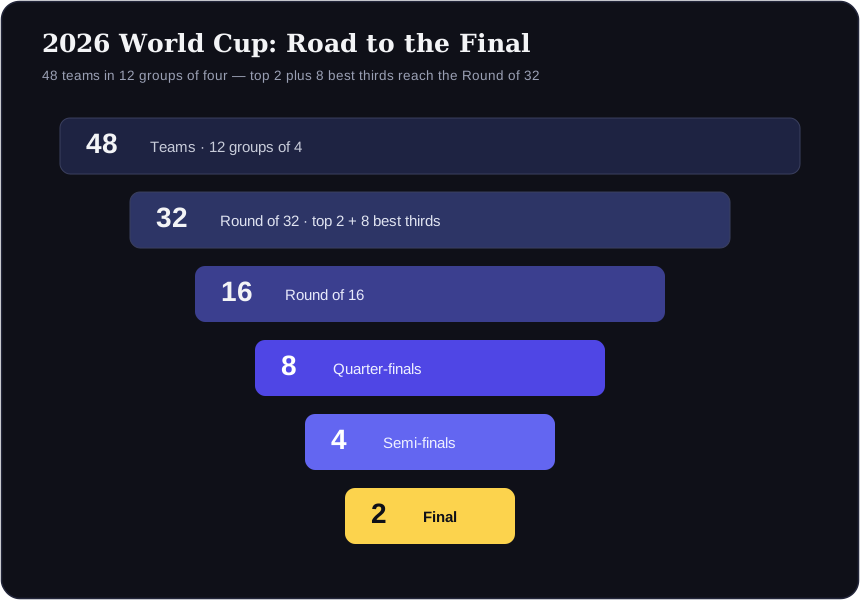
How teams qualify from the group stage
The simplest path is to finish in the top two of your group — those 24 spots are guaranteed. Because four-team groups can easily produce teams level on points (a group where three sides finish on four points is entirely realistic), tiebreakers do a lot of work in 2026.
Group-stage tiebreakers, in order
If two or more teams finish level on points, FIFA separates them using this sequence — and note that 2026 applies head-to-head results first:
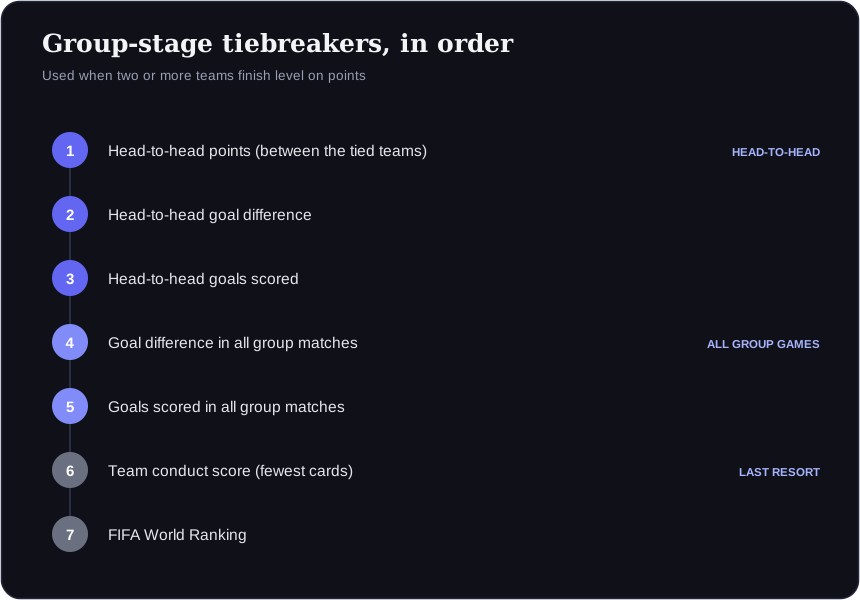
- Head-to-head points — points won in the matches between the tied teams only.
- Head-to-head goal difference — goal difference in those matches.
- Head-to-head goals scored — goals scored in those matches.
- Overall goal difference — across all three group games.
- Overall goals scored — across all three group games.
- Team conduct score — a fair-play measure from yellow and red cards (players and team officials); fewer cards is better.
- FIFA World Ranking — the final separator.
A quick example: if three teams all finish on four points, you first re-rank them using only the results of the games among those three. If that mini-table is still level, you fall back to overall goal difference, then overall goals, and so on down the list.
How the eight best third-placed teams advance
Here’s the part unique to the 48-team era. After the groups finish, the twelve third-placed teams are compared against each other — a cross-group ranking — and the best eight go through; the other four are eliminated. Because these teams haven’t faced one another, head-to-head doesn’t apply; instead they’re ranked by:
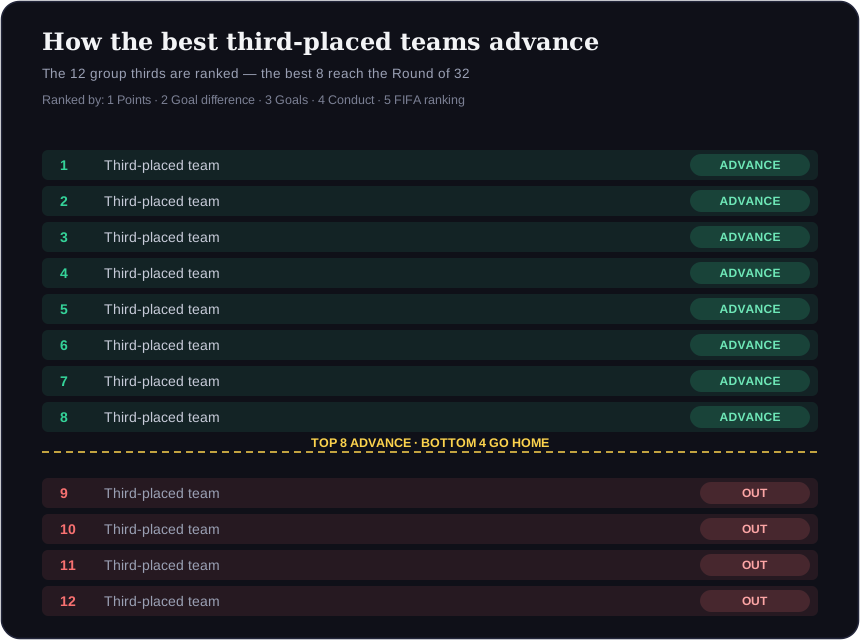
- Points, 2. Goal difference, 3. Goals scored, 4. Team conduct score, 5. FIFA World Ranking.
With only four of twelve missing out, the margins are brutal — a late consolation goal, or one fewer booking, can be the difference between a flight home and a place in the Round of 32. That is exactly the cut that ended South Korea’s tournament — they finished third in Group A and missed the eight-team cut, an exit that escalated into a government investigation .
Who plays whom in the Round of 32
Because the identity of the eight advancing third-placed teams isn’t known until the groups end, the bracket uses a predetermined lookup table (published as Annex C of the tournament regulations, covering 495 possible combinations). It assigns each qualifying third-placed team to a specific group winner, and it’s designed so that teams from the same group cannot meet again in the Round of 32. In practice, a group winner will know it faces “a third-placed team from one of five possible groups,” with the exact opponent confirmed once the group stage wraps.
Why the format makes the group stage so tense
The trade-off is real. On one hand, more qualifying spots mean a powerhouse is very unlikely to crash out early — it would take a genuinely disastrous run for a top side to miss the cut. On the other, the third-place race turns would-be dead rubbers into high-stakes math, where coaches track goal difference and even card counts in real time. Expect tiebreakers to decide multiple knockout places in 2026.
The knockout rounds
From the Round of 32 onward, it’s single-elimination: win or go home. If a knockout match is level after 90 minutes, it goes to 30 minutes of extra time (two 15-minute halves) and, if still tied, a penalty shootout. The eventual champion will have come through three group games and five knockout rounds — eight matches in all.
2026 World Cup FAQ
How many teams advance from each group? The top two automatically, plus a shot at qualifying as one of the best third-placed teams. How many third-placed teams advance? Eight of the twelve. What’s the first tiebreaker? Head-to-head points among the tied teams. Can a third-placed team win the World Cup? Yes — once into the Round of 32, every team is on equal footing. How many games does the champion play? Eight.