2026 NBA Draft: Top Wing Prospects and Relatable NBA Comparisons for the Top 10

The 2026 NBA Draft is loaded at the top, light on scoring wings, and heavy on guards once you clear the top four. With draft night almost here, here’s a look at the best wing prospects — and a relatable NBA comparison for every projected top-10 pick.
When is the 2026 NBA Draft?
The draft runs across two nights, June 23–24, 2026, at Barclays Center in Brooklyn (ESPN/ABC). The order was set by the May 10 lottery, which the Washington Wizards won, giving them the No. 1 pick ahead of the Utah Jazz at No. 2.
The top wing prospects
The crown jewel is AJ Dybantsa, the BYU freshman who led Division I in scoring and projects as a two-way scoring wing. He generates rim pressure, draws fouls, knocks down tough mid-range shots and defends on the ball — exactly the archetype every team covets. This class is famously thin on pure scoring wings, which only raises his value. Behind him, Caleb Wilson profiles as a high-upside forward/wing, while Brayden Burries and Baylor’s Cameron Carr are the names to watch for teams hunting perimeter shot-making later in the lottery.
Relatable NBA comparisons for the top 10
Comparisons are about style, not guarantees — but they’re a useful shorthand for how these prospects might play. Here’s the projected top 10 with a comp for each (order beyond the top four varies by mock).
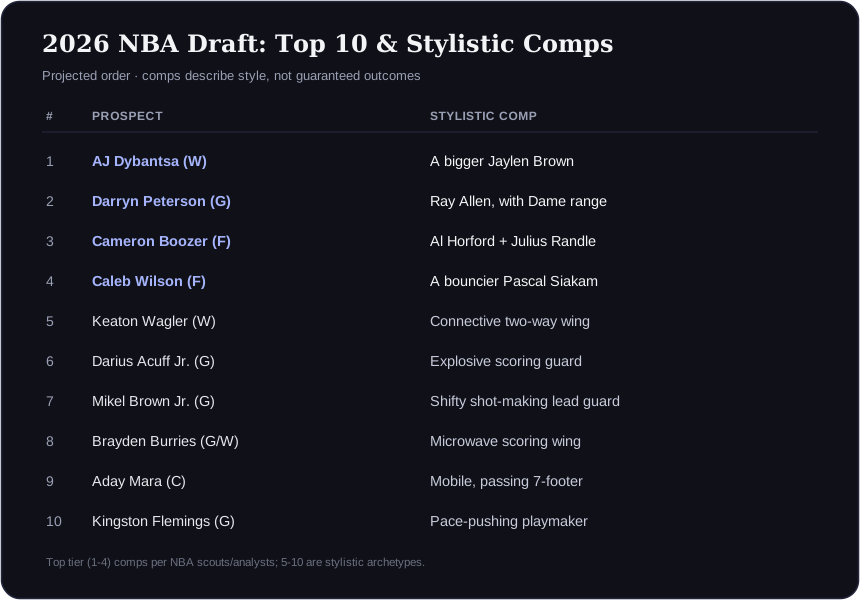
- AJ Dybantsa (Wing, BYU → Wizards) — Scouts repeatedly land on a bigger, longer Jaylen Brown, with Kawhi Leonard as the dream ceiling.
- Darryn Peterson (Guard, Kansas → Jazz) — A lethal three-level shooter (43% on catch-and-shoot threes at Kansas); think Ray Allen on the high end, with flashes of Damian Lillard’s range.
- Cameron Boozer (Forward, Duke → Grizzlies) — A high-IQ, high-floor big whom scouts compare to Al Horford, with shades of Julius Randle’s bully-ball scoring.
- Caleb Wilson (Forward → Bulls) — Raw but explosive; the upside flashes look like a bouncier Pascal Siakam, with peak John Collins as the safer outcome.
- Keaton Wagler (Wing → Clippers) — A connective two-way wing whose size, shooting and feel make him plug-and-play.
- Darius Acuff Jr. (Guard) — An explosive, downhill scoring lead guard who plays with serious bounce.
- Mikel Brown Jr. (Guard) — A shifty shot-making point guard who’s been rising up boards.
- Brayden Burries (Guard/Wing) — A microwave scoring wing who can heat up in a hurry.
- Aday Mara (Center) — A massive, mobile 7-footer who passes and protects the rim.
- Kingston Flemings (Guard) — A pace-pushing playmaker rounding out the projected lottery.
How do the top prospects compare by the numbers?
Among the three forward prospects, Dybantsa led in scoring while Boozer was the most complete producer. Dybantsa averaged a tier-best 25.5 points per game with 6.8 rebounds and 3.7 assists for BYU; Boozer put up 22.5 points and a tier-best 10.2 rebounds with 4.1 assists for Duke; and Caleb Wilson averaged 19.8 points and 9.4 rebounds for North Carolina.
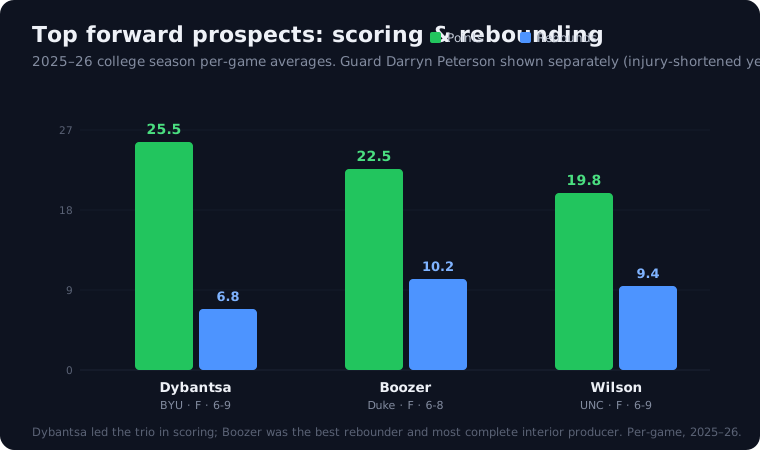
The verified per-game numbers for the forward trio:
| Player | PPG | RPG | APG | FG% | 3P% |
|---|---|---|---|---|---|
| AJ Dybantsa | 25.5 | 6.8 | 3.7 | 51.0 | 33.1 |
| Cameron Boozer | 22.5 | 10.2 | 4.1 | 55.6 | 39.1 |
| Caleb Wilson | 19.8 | 9.4 | — | — | 25.9 |
The sharpest difference is outside shooting, which often shapes how a forward’s game translates to the NBA.
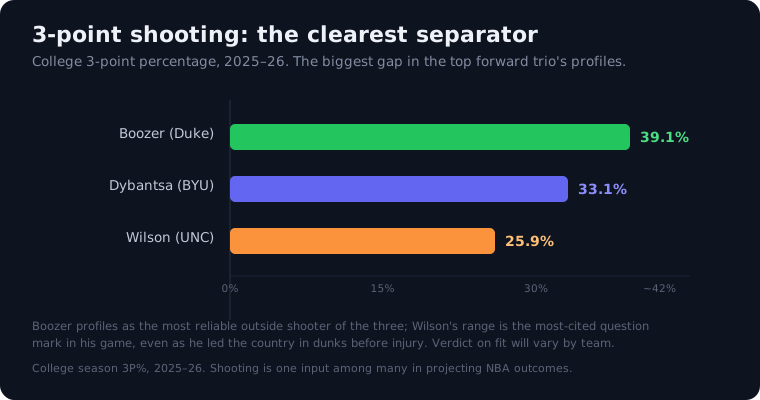
Boozer was the most reliable shooter of the three at 39.1% from deep on real volume, while Wilson’s 25.9% is the most-cited question mark in his profile — even though his rim pressure (he led the country in dunks before a hand injury) is elite. Dybantsa landed in between at 33.1%, a figure evaluators expect to improve.
Dybantsa vs. Peterson: the No. 1 debate
Washington has signaled it’s leaning toward Dybantsa, who’s viewed as the rare “safe with no ceiling” prospect. Peterson’s camp has pushed back hard — even canceling a Utah workout to argue he should go first. And don’t sleep on Boozer: some evaluators call him the most “can’t-miss” player in the class thanks to his production (the second-highest box plus-minus on record for an 18-year-old, behind only Zion Williamson). Whatever the order, the top three look locked in barring a surprise.
For more on the summer’s biggest sporting events, see our 2026 World Cup power ranking and the US Open 2026 leaderboard .